


With no device at all
Your own entries and the documents you photograph are the record. An owner records an oil service, keeps the shop receipt with that truck, and finds it when the buyer, the auditor or the next mechanic asks.
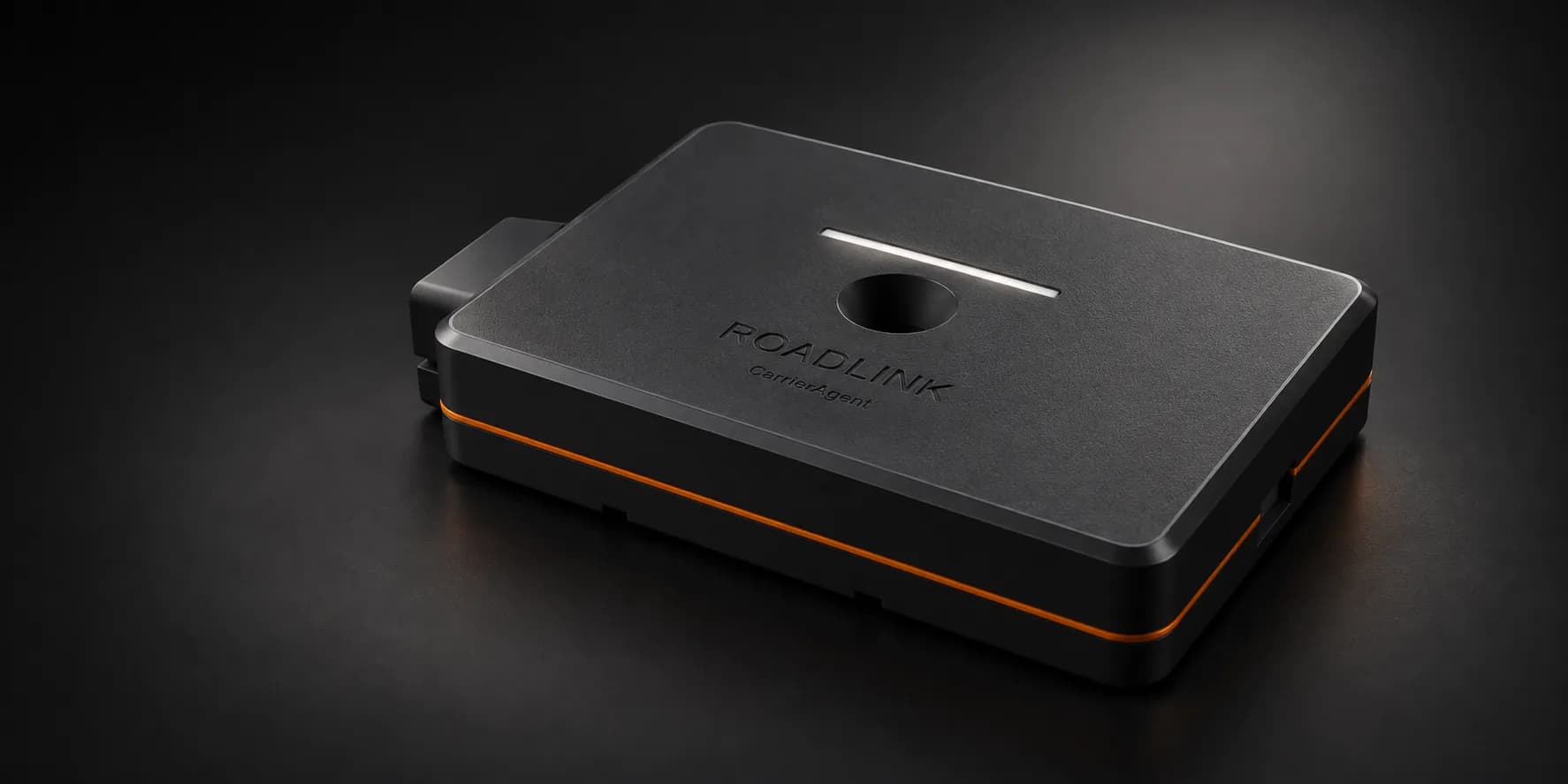
We’re building RoadLink to connect engine readings, tire sensors, trip observations and security events with the work you keep in CarrierAgent. Engine health, miles for the quarter, linked tire sensors and a security view, in one record that belongs to the truck.
Each chapter shows the customer story and what it depends on. Everything here is planned and labelled as a sample; the device reports, and you and your documents still say what was done.
What you can see depends on the truck and on how the device connects to it. RoadLink listens; it never sends a command to the engine.
A reported condition, with its time. It is not a diagnosis and it does not name a failed part. An older reading is shown as older.
The plan: engine readings the truck already puts out, repeated conditions grouped together, engine hours and distance against the service schedule you set, and the repair record kept beside them. It does not certify the truck is safe to drive and it does not predict a breakdown.
Tire pressure needs a supported sensor on a named wheel. The device on its own cannot measure a tire.
Pressure and temperature together, with the wheel and the last update. Which sensors work, how far the signal carries and how your truck is set up all still have to be checked.
A change against the range you set, in ordinary words. It is a reason to look, not a prediction of failure.
Follow a probe reading against the range you set. A probe is not the reefer's set point and does not certify cargo.
The plan: supported tire sensors linked to the device and the app, readings by assigned wheel, and thresholds you configure. Trailer beacons are a further planned accessory; you confirm which trailer a beacon belongs to.
Position and truck-distance readings keep their source, time and coverage.
A gap stays a gap. RoadLink never fills it with a route estimate or invents missing miles.
Candidates you can review against the trip. They never complete a pickup, a delivery, a POD or a detention charge on their own.
Planned mileage tracking for the IFTA workflow, with coverage and missing sections clearly shown. RoadLink mileage is not yet available for filing. The fuel and miles records you review today stay the ones that count until RoadLink mileage is proven good enough to file with.
With the time and the last available location. Missing location stays missing.
Recorded when the device sees it. Getting a message out after a power cut depends on an optional energy store that is not yet proven.
A record to review and act on. It does not diagnose a crash, it does not score the driver, and nobody is contacted automatically.
A planned security view for unexpected movement and device events: movement while parked, a lid opening, power loss and measured impacts. You review the event and choose what to do. How an alert would reach you is still being worked out, so nothing here promises a message will arrive.
Maintenance works as an app journey on its own. Buying RoadLink is never a prerequisite for ordinary paperwork or service records.
An oil service, a brake job, a tire swap: the truck, the date, what was done and the odometer.
Building nowThe shop, the parts, the cost and a note in your own words, on the truck's own record.
Building nowPhotograph the invoice when you pay it. It stays with the owner's records; a driver with service-note access never sees the dollars.
Building nowOne timeline per truck, by VIN, that survives a driver change. Readings and reported conditions can join it later with RoadLink.
PlannedMileage, hours and date rules you set, plus registration and inspection dates surfaced before they lapse.
PlannedYour own entries and the documents you photograph are the record. An owner records an oil service, keeps the shop receipt with that truck, and finds it when the buyer, the auditor or the next mechanic asks.
Available engine hours, distance and reported conditions can join the same history, so a later condition can be read against the earlier repair. The device reports; you and your documents still say what was actually done.
The whole map, in plain words. The device itself comes first; tire sensors, trailer beacons and probes are add-ons you would buy separately, and none of it is available to customers today.
It listens. RoadLink never sends a command to the engine and never clears a fault.
Add-ons you buy separately. The device on its own does not measure a tire or a trailer.
Readings that keep where they came from, when, and what is missing. Gaps stay gaps.
A record of unexpected activity for you to review. Not an alarm, and not a promise the truck comes back.
Leave an email and tick Roadlink. We write when there is real hardware news, and not one day before.